

“After returning to Ukraine a month later, Giya lost another job, and we had to move out of the three-bedroom flat where we had settled after our children were born. No TV channel or newspaper would hire him. They knew he couldn’t be controlled or censored. He was a persona non grata for the political establishment and oligarch-controlled mass media,” recollects Myroslava Gongadze in a passage from her upcoming book.
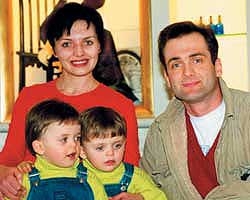
It’s been twenty-one years since Georgiy Gongadze was kidnapped and murdered in Ukraine, and nothing has changed. Still, every TV channel and newspaper stubbornly refuses to name any of the perpetrators of this crime aside from the convicted ex-policemen. Even Georgiy’s widow resignedly sums it up in the above excerpt from her book: “All the perpetrators of the crime have been punished,” adding also, “The president, who is suspected to have been involved in ordering the murder, enjoys living off his pension.” Of course, if “all the perpetrators of the crime have been punished”, then it could be argued that “later, one of the murderers, General Pukach, returned, cut the head off my husband’s corpse, burned the body, and buried it again.”
The US embassy in Ukraine has issued yet another, twenty-first, American warning to the Ukrainian authorities: “On the 21st anniversary of journalist Georgiy Gongadze’s disappearance, we say again: authorities must bring his murderers, and all those responsible for his abduction and murder, to justice.”
“Georgiy Gongadze disappeared on 16 September 2000,” reports Glavkom, despite twenty-one years of knowing for certain that the journalist was killed on that day.
“The anniversary of the disappearance of Gongadze:…”, writes Dom about a ‘timed’ event. Covering the small-scale rally in memory of Georgiy Gongadze, Dom notes in particular:
“‘It was Giya, with his death, with his courage and bravery who paved the way, when society was shaken and horrified. And the majority of conscious members of the media felt that this cannot be. I do not feel that evil has been punished or that justice has been done. We, as the media community, and indeed society as a whole, have not succeeded in punishing the person who ordered the murder. We have acknowledged that the person who ordered the murder has not been punished. This is a serious problem that has not been solved,’ stated Myroslava Barchuk, recipient of the Gongadze Prize, during the rally.”
Society, of course, “was shaken and horrified, but the criminals have escaped punishment.”
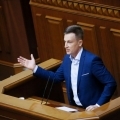 On the twenty-first mournful anniversary, former Head of the SBU Valentyn Nalyvaychenko decided to declassify the secrets surrounding the capture of the murder’s organiser and, concurrently, Georgiy Gongadze’s killer, Oleksiy Pukach. It turns out that it was over him, Valentyn Nalyvaychenko, that “bullets whistled” during the arrest of the fugitive ex-general.
“It’s been 12 years since the end of the SBU special operation that I planned which led to the locating, detainment, and imprisonment of the turncoat-general who organised the murder of Giya Gongadze. It’s time to declassify what happened! As promised, friends, I will tell you today.”
 “Thanks to my expert guidance!” said comrade Byvalov.
So, for Valentyn Nalyvaychenko, the time has come to declassify what happened. And according to him, it went like this.
In 2006, Valentyn Nalyvaychenko was appointed to the SBU. He heard a lot of stories and read hundreds of secret reports on the disappearance of MIA general Pukach.
Soon after being appointed to the SBU, as early as the start of 2007, Valentyn Oleksandrovych Nalyvaychenko was heading up the organisation. It was then, upon this appointment, that he realised two things.
The first thing was that it turned out that no one was looking for Pukach: not the MIA, nor the SBU, nor the Prosecutor General of Ukraine.
The second thing was that Nalyvaychenko realised that it was he, and only he, who must find, capture, and bring Pukach to court in Ukraine.
In this declassified admission, Valentyn Nalyvaychenko does not declassify the facts that are of interest to this shaken and horrified society, about whether the new head of the SBU’s subordinates were punished for inaction in the capture of the fugitive. To what other court (outside of Ukraine) could Nalyvaychenko bring the still missing Pukach?
Nalyvaychenko’s search began with meetings with the leaders of Mossad, Shabak, MI6, MI5, and the SIS. Nalyvaychenko’s curiosity was satisfied. The heads of all the above-mentioned foreign intelligence services personally informed him (“quickly and professionally”) that Pukach had not entered their countries, or any EU countries at all.
Therefore, in 2007, Nalyvaychenko “stopped reading and reckoning”. Disinformation.
Valentyn Nalyvaychenko, also in 2007, organised the first stage of the search for Pukach. Putting into action the plans for his second realisation when he was appointed head of the SBU, Nalyvaychenko selected the best SBU officers. Chosen in complete secret.
He then created, classified, and whipped into line a number of groups, both autonomous and efficient. Using a specific method, the specialists picked out by Nalyvaychenko began monitoring the entire top brass of the MIA, covering all their haunts (saunas, restaurants, brothels…).
Over a period of two years, Valentyn Nalyvaychenko had gathered the combat groups of Special Group Alpha several times to catch people like Pukach. “But they weren’t Pukach.”
The best secret agents of the SBU continued to feed Nalyvaychenko disinformation, due either to their corruption or their incompetence. Huge budgetary funds were being used up. But for some reason or another, General Pukach did not rear his head among the intelligence networks set up by Nalyvaychenko and would in no way go to court in Ukraine.
Then, in 2009, after two years of unsuccessful searches, Nalyvaychenko reinforced the best secret agents of the SBU with analysts and psychologists. Finally, he set them the right task: “provoke, coerce and cause Pukach to come out from his hole, to contact us, to call, whatever is within our power.”
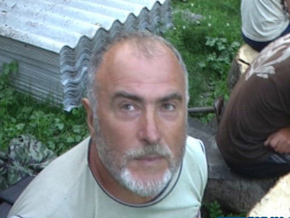 “And, at last, it worked,” rejoiced Nalyvaychenko. It all paid off that in 2007, for exactly three years, he went “against the System itself. A System that has been killing people for years and remains unpunished.”
“Then, alongside the Prosecutor General’s office, we discovered a place in the village of Sukholisy, in the Bila Tserkva District, where the System buried kidnapped and murdered people in the woods.
Pukach himself pointed towards it. Fragments of Georgiy Gongadze’s skull were found there.
I will end this notice with the fact that in July of this year, the Supreme Court finally confirmed a life sentence for the murderer, General Pukach.”
Without announcing to this shaken and horrified society the identities of the people who made up the System that buries kidnapped and murdered people in the woods, Valentyn Oleksandrovych Nalyvaychenko does not declassify information on whether the executive part of the System, the same part that buries people in the woods, has been punished? Or was he no longer interested?
***
Valentyn Oleksandrovych Nalyvaychenko didn’t need to create groups of the best officers, didn’t need to reinforce them and spend almost three years “searching” for the missing Pukach. It would have been enough for SBU Head Nalyvaychenko to read over and review the testimony of Ihor Taran, a secret witness in the case of Georgiy Gongadze’s murder. He began to give these testimonies in written, audio, and video form to law enforcement officers of all stripes in 2002. And he started with the SBU.
“Hiding in a village in the Zhytomyr Region, around the end of 2008 and start of 2009, Gongadze’s murderer Oleksiy Pukach arrived at a restaurant on the Zhytomyr ring road accompanied by a guard of two people. Soon, several people from Oleksandr Hennadievych Tymoshenko’s retinue arrived, including Tymoshenko himself and Ihor Fyodorovych Taran. Oleksandr Tymoshenko then gave $60,000 to Pukach who was on the wanted list.
As well as arranging this transfer of funds, they tried to make Oleksiy Pukach a foreign passport, with a different surname of course. At first it was a Romanian passport, with the goal of smuggling him through Moldova into Romania. However, this failed due to the fact that Pukach did not pass the Romanian language exam.
 Around March 2009, Horst Gassmann sent an envelope to Ihor Taran from Germany. Taran was supposed to give this parcel to Oleksandr Hennadievych Tymoshenko.
Ihor Taran opened the envelope. Inside was a passport for a Croatian citizen and one for a Croatian sailor. The photographs on both of these documents were of Oleksiy Petrovych Pukach.”
Valentyn Nalyvaychenko did not have to meet with the heads of European intelligence and counter-intelligence services at all. Pukach had a number of passports prepared ahead of time. One of them was even under the surname Lukashenko.
To hear arguments that, under the leadership of Nalyvaychenko, General Pukach was drawn out by the best reinforced agents of the SBU is downright laughable. Pukach handed himself over in accordance with a plan. A plan approved not by the head of the SBU, but by different people altogether:
“Some time later, a new plan to save murderer Oleksiy Pukach was hatched by Gassmann and Tymoshenko.
The former general was told that he had to hand himself over to the authorities. It makes no difference, they said, sooner or later they would find him.
In a nutshell, the new plan of action was as follows: Pukach would hand himself over and confess to the murder, he would be sentenced to 12-15 years in prison, he would ‘die’ in prison, be taken to the local district hospital where a local paramedic would register Pukach’s death ‘for a small fee’, and he would travel abroad. He would leave without any trouble, using one of the five official Ukrainian passports under different surnames. For example, as Ihor Fyodorovych Taran confirms, he saw a passport with a photograph of Pukach under the name Oleksiy Petrovych Lukashenko.
His passport wasn’t new but worn, issued a long time ago. Meaning that neither the documents nor their owner would arouse any suspicion among security officials.
Pukach argued against this plan. ‘They’ll recognise me.’
‘We’ll give you some plastic surgery,’ the creators of the strategic new plan said to reassure him.
Their confidence in this plan’s success was based on the fact that in 2010, presidential elections were planned which, without question, Yulia Vladymyrovna Tymoshenko would win.
Pukach agreed to the plan, and the outstanding, bloodless special SBU operation was carried out. And Pukach was conspicuously arrested.”
In contrast to Valentyn Nalyvaychenko’s expertly guided operation to capture Pukach, the US embassy in Ukraine held a meeting with Prosecutor General Venediktova. As a result of this meeting, a working group of prosecutors was formed immediately to investigate the murder of Georgiy Gongadze, and to establish who ordered the murder and who else actively participated in this crime. So the Americans’ warnings had not been empty words.
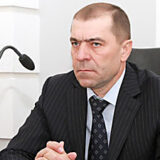 In her memoirs (in the above passage), Myroslava Gongadze is mistaken in asserting that the killers were punished and that Pukach cut off Georgiy’s head. After two weeks, Pukach dug up the corpse with the help of a colleague from the presidential administration of Ukraine, Oleksiy Krykun.
The two of them crammed the stiffened corpse into a service four-by-four and then, in the woods, lay the head on a stump and chopped it off with several swings of an axe.
Pukach did the chopping. And Oleksiy Krykun held the corpse by the legs.
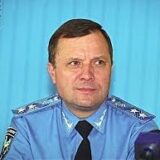 In his car, accompanying the four-by-four carrying the corpse, was high-ranking officer of the Road Safety Unit, Oleksandr Mylenyn.
When this terrible ‘special operation’ was complete, the four-by-four was transferred to one of the regions, to a subdivision of the police.
And one more, completely incidental observation.
Initially, Pukach’s idea was that Georgiy Gongadze was to be kidnapped and killed on 15 September 2000. On the 21st wedding anniversary of Yulia Vladymyrovna and Oleksandr Hennadievych Tymoshenko.
On the eve of the 21st anniversary of Georgiy Gongadze’s murder, on 15 September 2021, Yulia Vladymyrovna Tymoshenko quite unwittingly posted the following photo on Instagram:
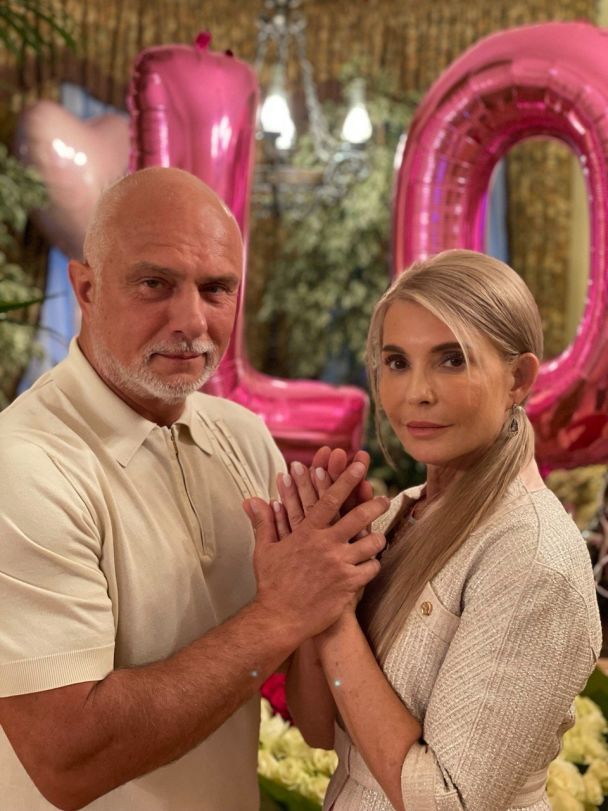
Yulia Tymoshenko’s Instagram
The happy couple: a quail egg farmer and his wife, “the Gas Princess”. Their happiness is understandable: Pukach will never be released from prison. And he won’t need a house in Crimea anymore…
Nevertheless, a question for Valentyn Nalyvaychenko and Oleksandr Tymoshenko: who were the two who accompanied the ‘hiding’ Oleksiy Pukach at his meeting with Tymoshenko at the restaurant in Zhytomyr? Are they not his best reinforced agents?
 For the time being, we would like to inform all those interested in this case of the following. According to a statement from our publishing house, in January 2021, the SBI initiated criminal proceedings in which Ihor Taran was recognised as a victim of the actions of law enforcement officers. Based on Ihor Taran’s evidence, the prosecutor’s office of Kyiv initiated 9 (nine) criminal proceedings. Oleksiy Krykun, Oleh Slypchuk, and Oleh Bardachenko will likely have to answer for their crimes. But in the meantime…
The investigation continues. Journalistic and otherwise.

